
Executive summary
Human in the loop is the phrase firms reach for when they talk about checking AI. This piece looks at what the phrase means inside a firm, what the Supreme Court of New South Wales and the Tax Practitioners Board now expect, and how a firm can name where a person reads the work and who that person is.
We are coming to expect the presence of AI in daily tasks. For example, let's consider an email. People use AI to draft replies, tidy up long messages and pull the actions out of a thread that has run to 20 messages, and that's a good thing.
What we're also seeing is the round trip. One person asks AI to write an email. The person receiving it asks their own AI to summarise it and draft a reply, then sends that back. Two people have signed off on the exchange. How much of it did either of them read? And if AI is checking AI, where's the worth?
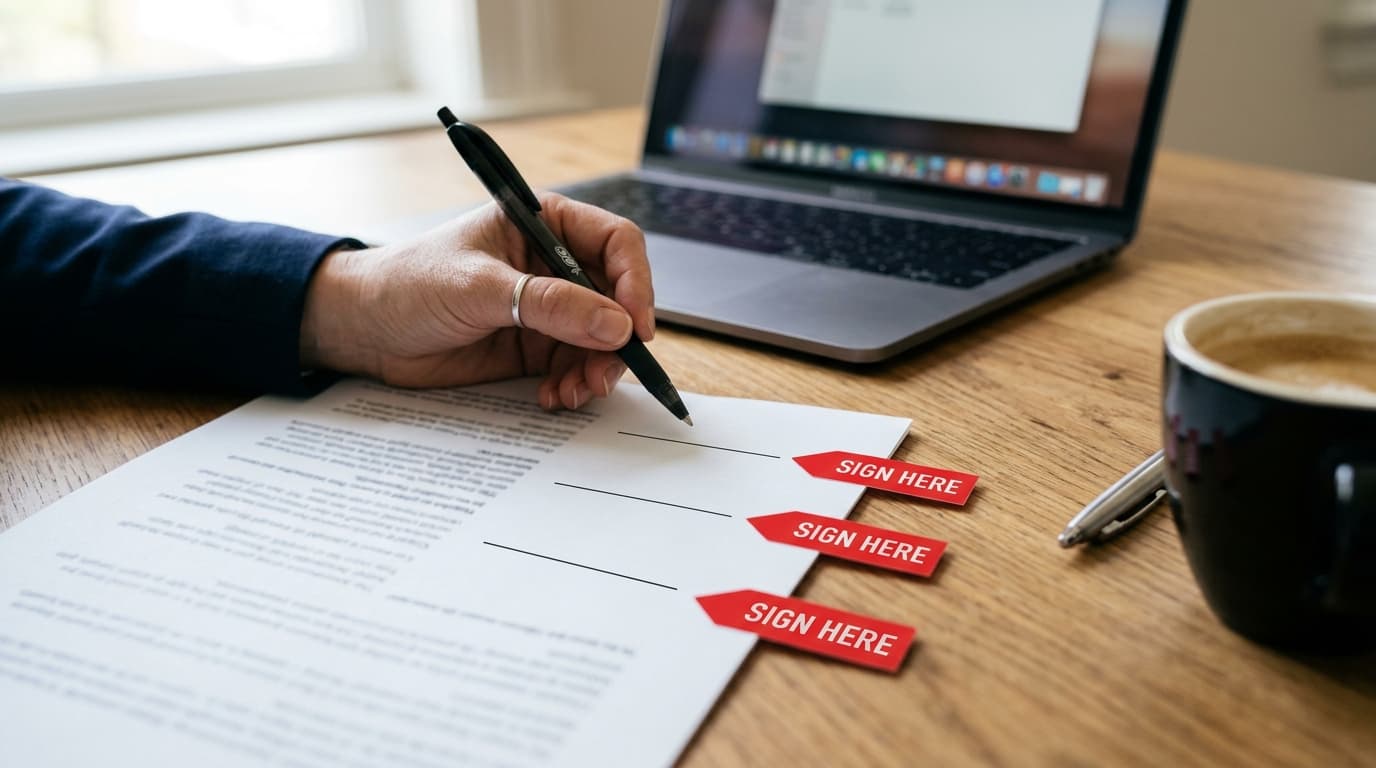
The same round trip can run on a letter of advice, a matter note or the figures in a client report. Somewhere along the way a person needs to read the work properly, and the firm needs to know who that person is.
1Human in the loop
That person is known as "the human in the loop". The phrase is used in AI and automation to describe a person who reviews or corrects a system's output. In a firm, it usually means a person checks what AI produces before the firm relies on it.
But who is the human? At what point do they check, and what are they checking for? What we're seeing is that each person answers those questions for themselves, so the rule looks a little different at every desk, and sometimes it comes down to a quick look at the tone.
In practice, a lot of the checking tends to settle on one careful person. Let's take a look at Jane in accounts.
Jane reads everything before it goes out. Invoices, statements, the covering letter with the figures in it, and a fair few things that were never hers to check. She reads AI output with the same care she gives every draft, and she catches things. Ask the partners whether the firm has a human in the loop, and they may well think of Jane and say yes.
Jane is doing the firm a great service. However, she can only check the work that reaches her desk. Work that leaves the firm by another route goes out with whatever check its author gave it, and when Jane takes leave, her standard goes on leave with her.
2What the rules expect
Jane's careful read is close to what the NSW Supreme Court and the Tax Practitioners Board now expect in their respective areas. The Supreme Court of New South Wales issued Practice Note SC Gen 23, which took effect on 3 February 2025. Where AI has been used to prepare written submissions, clause 16 requires the author to verify that every citation and authority exists, is accurate and is relevant to the proceedings. Clause 17 adds: "Such verification must not be solely carried out by using a Gen AI tool or program."
The Tax Practitioners Board followed in July 2026. Its guidance statement TPB(GS) 55/2026 says tax practitioners "should verify and review AI generated content for accuracy throughout each step of the workflow". It also says that "tax practitioners are still ultimately responsible for the tax agent services they provide to their clients."
A check at each step is a lot to ask of one person in accounts, and it is easy to skip. In the Australian results of a 2025 study by the University of Melbourne and KPMG, 57% of employees said they had relied on AI output at work without evaluating its accuracy, and 59% said they had made mistakes in their work because of AI. The same study found 51% had presented AI-generated content as their own.
Those figures are about accuracy, which is most of what Jane checks. Is the figure the one on the file? Do the citations exist? Did the case say what the paragraph says it said? Some accuracy checks can be done directly against the source.
Then there's checking for judgement. Is this what the firm wants to say to this client right now? Does the tone suit a relationship that has run for 11 years? Does it pass the "pub test"?
That takes experience of the client and the matter, and it is a large part of what clients come to the firm for.
When one phrase covers both kinds, the work often goes to whoever is nearest. In a firm, that can mean a figure corrected after it has gone to a client, or a partner checking citations line by line.
AI Uplift Program
Find out who is checking what
The investigation maps how your firm's work moves from first draft to client and measures how long it takes today. You keep the findings either way.
3Where a person stops
When a partner finds a wrong figure in something that has already gone out, the first instinct can be to tighten everything. Every AI draft gets read twice, or AI comes off client work altogether.
But what happens a month later? What can happen is that the checking takes up the time AI saved, the people who were using AI well slow down, and some of that use moves to personal accounts where the firm can't see it. Jane, meanwhile, has more on her desk than before.
A firm gets further by deciding once where a person stops and reads the work, and who that person is.
Naming the checkpoints
Five steps set out the checkpoints on one page.
List the work that leaves the firm or goes on the file, such as letters of advice, file notes, research summaries, reports and invoices.
Mark the point where a person reads each piece. We usually start with four: before a client sees it, before it goes on the matter file, before advice is built on it, and before a figure leaves the firm.
Put a name or a role against each checkpoint, and say whether that person is checking for accuracy, judgement or both. A letter of advice might have the author checking the facts and the responsible partner checking the judgement.
Read down the names. Where one name sits against most of the work, that person is carrying the firm's standard the way Jane does, and some of that load can move to the people who wrote the work.
Keep the lightest touch for low-risk uses, such as formatting a document or transcribing a recording, where AI is not generating substantive content. A quick look is enough there. Anything the firm may later rely on, meeting notes included, belongs at a checkpoint.
When this is in place, people know which work is theirs to check, and they can use AI on low-risk work with more confidence. A new starter can be given the page as part of their AI induction. A client who asks how AI is used on their matter gets a clear answer. Jane can take a holiday without the firm's standard going with her.
A phrase the whole firm agrees with
- Checking depends on who happens to see the work
- One careful person catches what they can
- Accuracy and judgement are treated as one job
- After a mistake, everything gets read twice
- AI can end up checking AI
A human in the loop
- The firm has named where a person stops
- Each checkpoint has a name or a role against it
- Accuracy and judgement each have an owner
- Low-risk formatting and transcription get a quick look
- A person reads anything the firm stands behind
4Where we come in
Getting to Jane's holiday starts with knowing how AI output gets checked today. Our investigation looks at how your firm's work moves from first draft to the client, where a person reads it along the way, and how long your everyday work takes, so you have a baseline of your own. It includes a draft AI use policy for your partners to finalise, which gives your checkpoints a home. The findings belong to your firm whether or not we go any further together.
If you would like to work out where a person stops in your firm, reach out to our team. The first conversation works out whether your firm is the right fit for the AI Uplift Program, and whether we are the right people to help.
Finding your human in the loop
The same steps, in short.
0 of 6 checkedFrequently asked questions
What does human in the loop mean?
In AI and automation, it describes a person who reviews or corrects what a system produces. In a firm, it usually means a person reads what AI produces before the firm sends it or relies on it.
What does the NSW Supreme Court say about checking AI?
For submissions in the Supreme Court of New South Wales, Practice Note SC Gen 23 says verification of citations and authorities "must not be solely carried out by using a Gen AI tool or program."
What does the Tax Practitioners Board say about AI?
TPB(GS) 55/2026, issued on 22 July 2026, says tax practitioners should verify and review AI generated content for accuracy throughout each step of the workflow, and that they remain ultimately responsible for the tax agent services they provide to their clients.
What is the difference between checking for accuracy and checking for judgement?
Accuracy is about whether the citations exist and the numbers match the file. Judgement asks whether the work is the right thing to send this client now, which takes experience of the client and the matter.
Does every use of AI need a human check?
The Tax Practitioners Board expects AI generated content to be verified and reviewed throughout each step of the workflow. A quick look can be enough for low-risk uses such as formatting or transcription, where AI is not generating substantive content. Anything the firm may rely on later needs a person to read it, especially where work reaches a client, goes on the file, becomes the basis for advice, or sends a figure out of the firm.
About the author
Julia leads the investigation and is the author of the report presented to your leadership. Her background is in research, data analysis and business strategy.
Primary sources
Supreme Court of New South Wales, Practice Note SC Gen 23: Use of Generative Artificial Intelligence, amended 28 January 2025, commenced 3 February 2025supremecourt.nsw.gov.auTax Practitioners Board, TPB(GS) 55/2026 The use of Artificial Intelligence and the Code of Professional Conduct, 22 July 2026tpb.gov.auN. Gillespie, S. Lockey, T. Ward, A. Macdade and G. Hassed, Trust, attitudes and use of artificial intelligence: A global study 2025, The University of Melbourne and KPMG, Australia snapshot, 2025kpmg.comThis article is general information about how firms organise their use of AI. It is not legal advice, and any policy drawn from it should be finalised by your firm.